Biodiversity is one of the most common keywords used in environmental sciences, spanning from research to management, nature conservation, and consultancy. Despite this, our understanding of the underlying concepts varies greatly, between and within disciplines as well as among the scientists themselves.
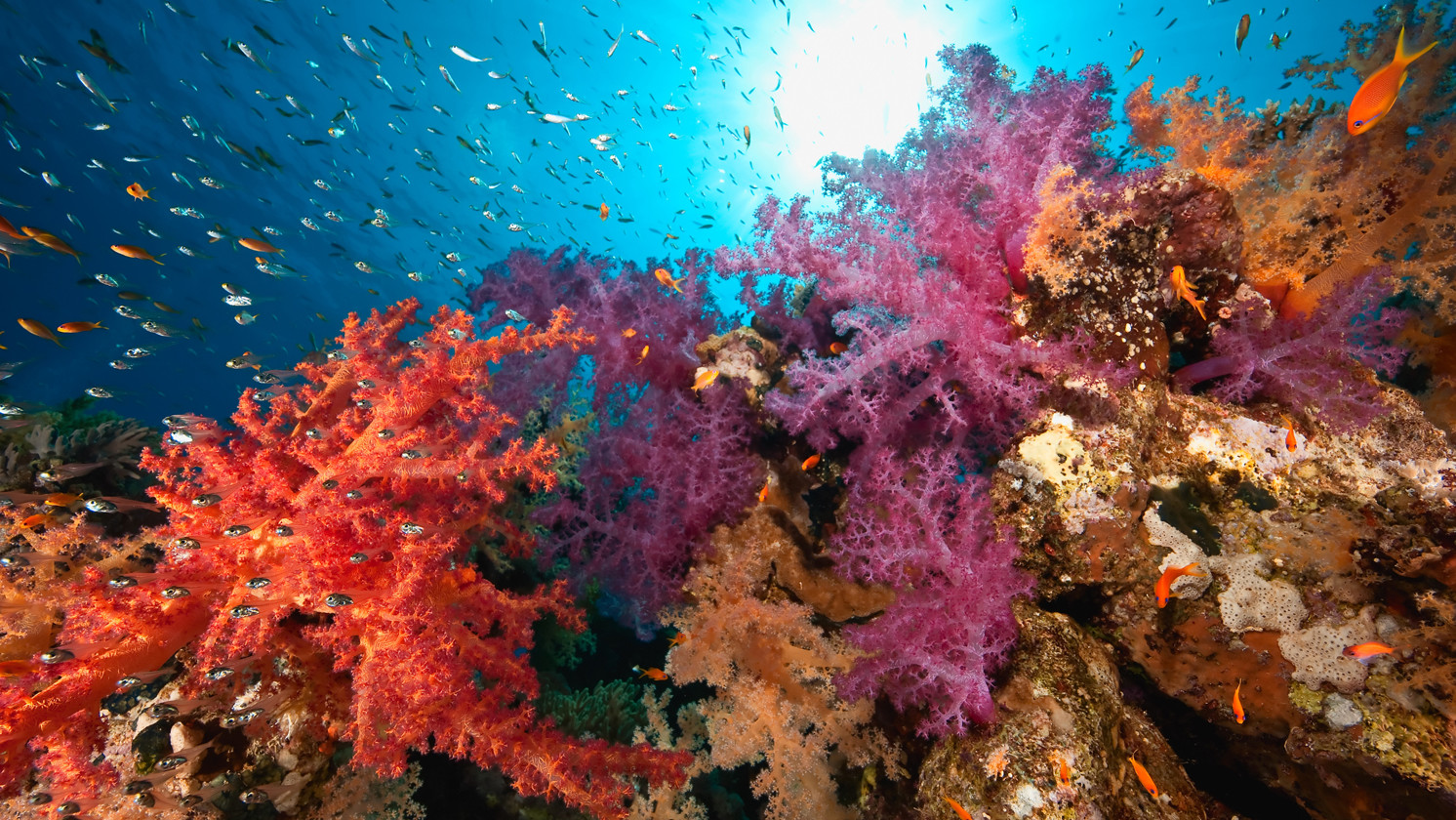
Marine biodiversity is an aggregation of highly inter-connected ecosystem components or features, encompassing all levels of biological organization from genes, species, populations to ecosystems, with the diversity of each level having structural and functional attributes
Biodiversity loss is happening and has been happening for hundreds of years. It is being driven by a multitude of anthropogenic stresses at a variety of spatial (local, regional, and global) and temporal (days to decades to centuries) scales. These stresses will act simultaneously to reduce taxonomic and functional diversity. The challenge for society now is to manage our exploitation of, and interaction with, the marine environment in a sustainable way so as to halt biodiversity loss and, where possible, promote recovery.
Fisheries are exerting worldwide high impacts on marine ecosystems, hampering long term sustainability of exploitation, causing depletion of abundance of several species and in some cases even resulting in local extirpation of marine species. Several integrated approaches are needed to increase knowledge, define references, balance trade-offs, identify applicable management practices and enforce them in order to increase the sustainability of fisheries exploitation. Challenging tasks that might have a chance of being more effective if a large group of people is aware of the complexity of the human-sea interaction.
The overall objective of the Interreg project FAIRSEA (Fisheries in the AdriatIc Region - a Shared Ecosystem Approach) is to enhance the conditions for implementing innovative approaches in the sector of sustainable fisheries management in the Adriatic Sea. Thus, other than the scientific development of a shared conceptual and operational framework for an Ecosystem Approach to Fisheries (EAF) adapted to address stakeholders’ and policy makers’ issues, the integrated efforts of the project are used for increasing awareness in the field of EAF.
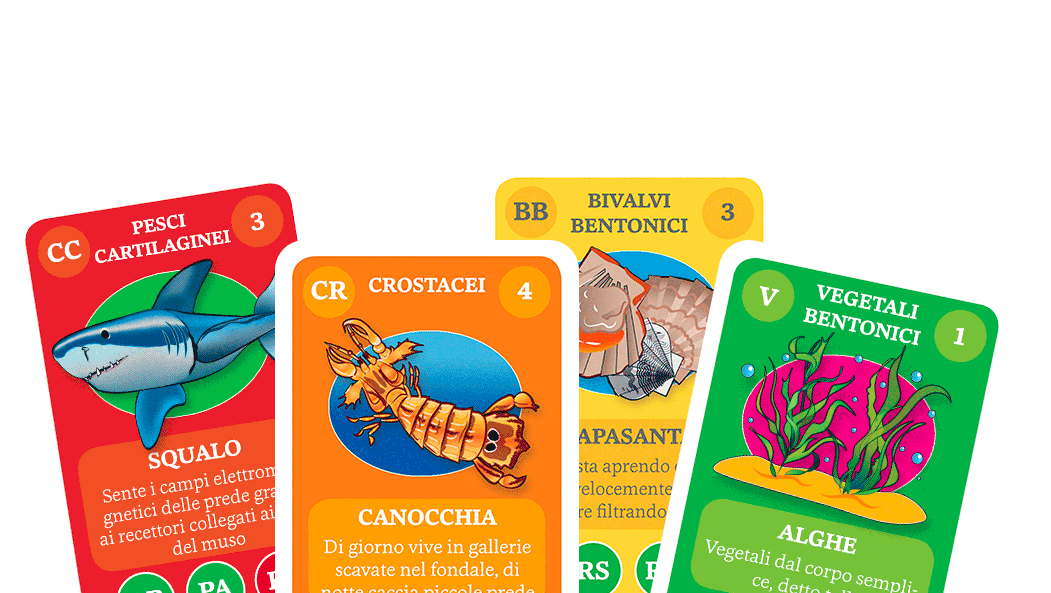
In order to increase awareness on EAF and create an impact that will last beyond the end of the project, FAIRSEA developed Fish n’ Ships, a card game reproducing the Adriatic and Mediterranean marine food web and fisheries complexity. The card game structure is conceptually similar to the integrated science-based platform developed in FAIRSEA as a support tool for fisheries management and contains its complexity in species, fisheries, environmental variabilities and socio-economic pressures. The Fish n’ Ship targets young generations (> 8 years) but has an appeal attracting people of any age. It has been developed to transfer the concepts of marine complexity in species, the different role of the species in the food web, the complexity of fishing equipment/nets with their targets and their discards. As in the real marine world, several unforeseen events can affect positively or negatively the marine ecosystem of players making fishing more or less difficult. Each player can choose his/her own strategy, like fishermen do. At the end the chances of winning are higher for those that balance at best the conservation of ecological components of the sea with a sustainable exploitation. Exactly the objective that we search for the Adriatic Sea and other seas worldwide and we rarely see applied.